 By Lincoln
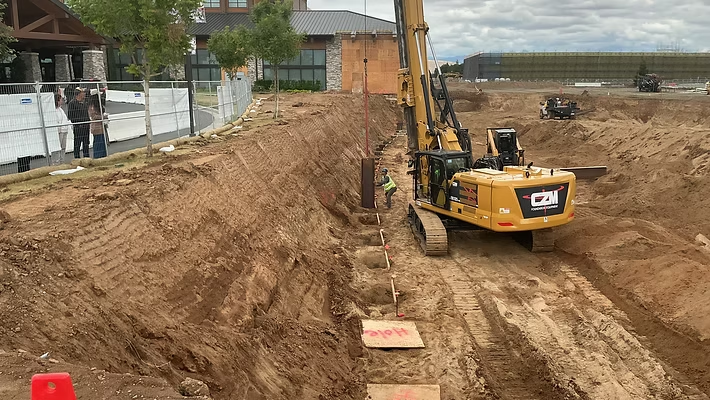
Shoring is one of those scopes of work that rarely gets attention until something goes wrong. It refers to the temporary or permanent support systems used to stabilize buildings, trenches, or excavations when they are at risk of collapse. On commercial job sites, shoring often determines whether the rest of a project can move forward safely.
Seiscore is a specialty shoring and structural contractor that self performs drilling, shoring, structural, and concrete work for commercial general contractors. This kind of specialization matters because shoring sits at the intersection of engineering and physical construction, and getting it wrong can put both timelines and worker safety at serious risk.

Shotcrete
What Shoring Actually Involves
At its core, shoring uses props, braces, or panels, sometimes called shores, to hold up structures or earth during construction, repair, or alteration. These supports can be vertical, angled, or horizontal depending on the specific site conditions and what needs to be stabilized.
- Vertical shoring supports structures directly from below
- Angled shoring, using raker style supports, stabilizes unsafe walls
- Horizontal shoring is common in trench and excavation work
- Soldier pile and lagging systems combine vertical piles with fill material for earth retention
Choosing the right approach depends heavily on soil conditions, depth, surrounding structures, and the specific goals of the project, which is why experienced engineering input matters so much at this stage.
Why Shoring Is Critical During Excavation
During excavation, trenches and open cuts are particularly vulnerable to collapse. Shoring systems are designed specifically to prevent that collapse from happening, which is different from shielding, a related but distinct safety measure that only protects workers if a collapse already occurs.
Properly designed shoring speeds up excavation work while keeping crews safe throughout the process. This is especially important on commercial sites where multiple trades may be working in close proximity, and any delay in the shoring phase can quickly cascade into delays across the entire project.
Shoring as Both a Subcontracted and Design Build Scope
One detail that often gets overlooked is the difference between hiring a shoring contractor purely as a subcontractor versus bringing them in as a design build partner. Seiscore serves as both a subcontractor and a design build contractor on shoring scopes, which gives commercial GCs flexibility depending on how a project is structured.
When acting as a design build contractor, a shoring specialist can be involved earlier in the process, helping shape the engineering approach before construction begins. This early involvement often leads to more efficient solutions, since the contractor performing the work has direct input into how it’s designed.
Common Shoring Applications
Shoring shows up across a wide range of commercial construction scenarios, not just new builds.
- Stabilizing foundations that have settled unevenly
- Supporting retaining walls against soil or water pressure
- Reinforcing structures during seismic safety upgrades
- Protecting adjacent buildings during nearby excavation work
Each of these applications requires slightly different engineering considerations, but they all share the same underlying goal, preventing structural failure while work is underway.
The Role of Licensing and Insurance
For commercial general contractors, verifying that a shoring partner holds proper licensing and insurance isn’t optional, it’s a fundamental part of risk management. Seiscore holds California Contractor License 1126002, along with insurance coverage designed for commercial GC contracts, giving project teams confidence in both compliance and accountability.
Working with a properly licensed and insured shoring contractor also simplifies the overall project structure, since it reduces the number of unknowns that a GC needs to manage across multiple subcontractors.
Self Performing Versus Subcontracting Further
There’s real value in working with a shoring contractor that self performs drilling, structural, and concrete work rather than subcontracting pieces of the scope out further. Fewer layers between design intent and physical execution generally means fewer miscommunications, tighter scheduling, and more consistent quality control across the entire shoring scope.
This is particularly relevant on commercial projects where shoring work happens early and any missteps can delay every phase that follows. A contractor with direct field capability across drilling, structural, and concrete work can adapt more quickly when site conditions differ from what was originally anticipated.
Final Thoughts
Shoring might not be the most visible part of a commercial construction project, but it is often the phase that determines whether everything else can proceed safely and on schedule. Understanding the different types of shoring, how they apply to specific site conditions, and the value of working with a properly licensed specialty contractor helps commercial GCs make more informed decisions from the earliest stages of a project.
FAQ
What is the main purpose of shoring in construction?
Shoring provides temporary or permanent support to prevent structures, trenches, or excavations from collapsing during construction, repair, or alteration work.
How is shoring different from shielding?
Shoring is designed to prevent a collapse from occurring, while shielding only protects workers if a collapse happens, making shoring a more proactive safety measure.
Why would a commercial GC choose a design build shoring contractor?
A design build contractor can be involved earlier in the process, helping shape a more efficient engineering approach before construction begins.