 By Lincoln
Running a food service operation means living under constant scrutiny. Health inspectors, USDA auditors, and FDA compliance officers all pay attention to the physical environment of your kitchen, and the floor is one of the first things they evaluate. For any commercial kitchen operator in New Jersey, understanding what compliant flooring actually looks like, and who installs it properly, is essential knowledge.
What Does USDA Compliance Actually Require From a Kitchen Floor?
USDA compliance for food service environments requires flooring that is non-porous, cleanable, and resistant to the accumulation of bacteria and pathogens. The surface must not harbor moisture in cracks, joints, or seams. It must withstand the cleaning and sanitizing chemicals used to meet food safety standards, and it must be slip resistant to protect workers in what is classified as a high-risk environment for injuries.
Standard tile with grout joints fails the first test immediately. Grout is porous by nature. It absorbs bacteria, moisture, and food particles no matter how often it’s cleaned. A seamless epoxy system, by contrast, eliminates every seam and joint from the floor surface. There’s nowhere for bacteria to accumulate, nowhere for moisture to penetrate, and nothing for cleaning chemicals to degrade over time. That’s why antimicrobial epoxy systems have become the floor of choice for USDA and FDA-compliant food service facilities.
Why Is Antimicrobial Flooring Important Beyond Basic Compliance?
Compliance is the minimum standard. Antimicrobial flooring goes a step further by actively resisting bacterial growth rather than simply being cleanable. In a commercial kitchen where raw proteins, dairy products, and produce are handled daily, the floor is a constant source of potential contamination if it isn’t built to resist bacterial accumulation at the surface level.
HPS Flooring’s systems are specifically formulated with antimicrobial properties that meet both USDA and FDA requirements for food service environments. This isn’t a marketing claim applied to a standard floor product. It’s a system designed from the material level up to address the specific biological risks present in commercial food preparation facilities. For kitchen operators who take food safety seriously, that distinction matters.
How Does HPS Flooring’s System Achieve Compliance?
The compliance picture starts with the material selection and extends through every phase of the installation process. HPS Flooring uses resins specifically designed to resist the harsh cleansers that food service facilities deploy for daily sanitation. Those cleansers are strong enough to break down standard flooring materials over time, which is why using a resin system formulated for this specific exposure is critical to long-term compliance and performance.
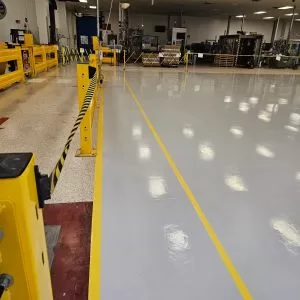
The seamless installation method is equally important. No primer joints, no tile seams, no grout lines means no places where bacterial biofilms can develop below the surface of a cleanable area. For operators researching commercial kitchen flooring systems that satisfy the full range of food service compliance requirements, a professionally installed antimicrobial epoxy system from an experienced specialist is the standard that inspection bodies consistently approve.
What Happens When a Floor Fails Inspection?
A failed health inspection is costly in ways that go well beyond the fine. Your kitchen may be shut down pending corrective action, which means lost revenue for every day you’re not operating. The corrective action itself often involves emergency floor repair or replacement, which costs far more than a planned installation would have. And the reputational damage from a public health inspection failure can affect customer confidence for months afterward.
Investing in properly installed, USDA-compliant flooring from the beginning is one of the most straightforward ways to protect your operation from these outcomes. For operators specifically looking at commercial kitchen flooring NJ standards, the good news is that HPS Flooring has been navigating NJ health and safety requirements for commercial kitchens for over 37 years. Their experience with local compliance expectations is a genuine asset that goes beyond simply knowing which materials to use.
How Does the Installation Hold Up Under Daily Sanitation?
This is where theory meets reality. A floor that’s technically compliant but degrades under the cleaning routine required to stay compliant isn’t actually a long-term solution. HPS Flooring’s resin systems are formulated specifically to withstand repeated exposure to the industrial strength sanitizers, degreasers, and quaternary ammonium cleaners that commercial kitchens use multiple times per day.
The chemical resistance built into their topcoat formulation means the floor doesn’t become porous, doesn’t discolor, and doesn’t delaminate from repeated chemical exposure. It stays cleanable because it stays intact. Over a service life measured in years rather than months, that combination of compliance and durability delivers real value to the kitchen operator who chose correctly at the beginning.
Conclusion
USDA and FDA compliance in a commercial kitchen isn’t something you can address after the fact when an inspector flags a problem. It needs to be built into the physical environment from the start, beginning with the floor. Antimicrobial, seamless epoxy systems installed by experienced professionals provide the compliance foundation that serious food service operators need. HPS Flooring has been delivering that standard to commercial kitchens across New Jersey, New York, and Pennsylvania since 1988. Their free consultation is the practical first step toward a floor that passes every inspection without question.
FAQ
What makes a commercial kitchen floor USDA-compliant? A USDA-compliant kitchen floor must be seamless, non-porous, resistant to bacteria accumulation, and able to withstand the chemical sanitizers used in food service environments. Epoxy systems meet all of these requirements.
Does HPS Flooring only work with commercial kitchens? Yes. HPS Flooring serves exclusively commercial and industrial food service facilities. They do not take residential kitchen or garage floor projects.
How resistant is the floor to harsh cleaning chemicals? HPS Flooring’s resins are specifically formulated to withstand the industrial-strength sanitizers and degreasers used in commercial food service, maintaining their integrity and cleanability throughout the floor’s service life.